
Unlocking the Power of AI: Transforming Customer Experience and Operational Efficiency for Small and Medium Businesses
2/18/20264 min read
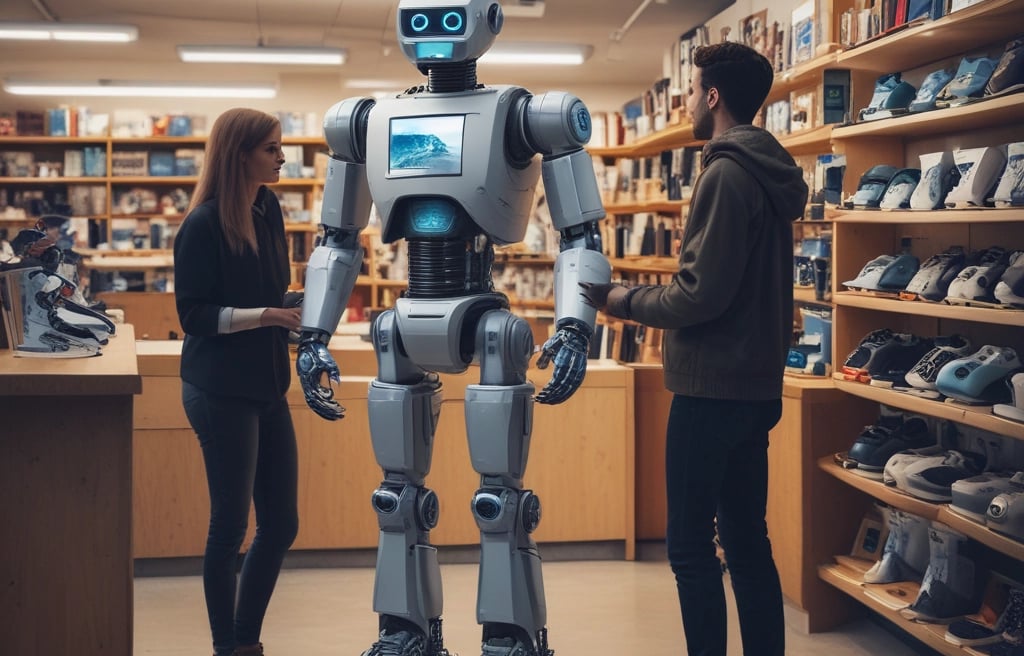

Understanding AI and Its Importance for SMBs
Artificial Intelligence (AI) refers to the simulation of human intelligence in machines that are programmed to think and learn like humans. This technology encompasses a variety of disciplines, including machine learning, natural language processing, and robotics. In recent years, AI has increasingly become a pivotal asset for businesses of all sizes, particularly for small and medium businesses (SMBs) seeking to improve their operational efficiency and customer engagement.
The importance of AI for SMBs cannot be overstated. As these businesses often operate with limited resources, the ability to leverage automation and data-driven insights becomes invaluable. AI systems can assist in task automation, predictive analytics, and personalized marketing efforts, enabling SMBs to enhance their competitiveness in a crowded marketplace. For instance, AI-driven customer relationship management (CRM) tools can analyze consumer behavior and preferences, providing businesses with the insights necessary to tailor their services or products accordingly.
Moreover, AI's capability to streamline operations allows SMBs to allocate resources more effectively, reducing operational costs while maintaining high levels of service. Over the years, AI technology has evolved significantly, with advancements in computing power and algorithmic sophistication leading to more accessible and user-friendly solutions tailored for smaller enterprises. These innovations have created opportunities for SMBs to innovate, respond to market changes, and meet customer expectations more proactively.
In conclusion, by integrating AI technologies, small and medium businesses can transform their operational processes and enhance customer experiences, thus gaining a competitive edge in an increasingly technology-driven economy. As AI continues to advance, the potential for SMBs to harness this power will undoubtedly expand, paving the way for sustained growth and success.
Enhancing Customer Experience through AI Solutions
In the modern marketplace, small and medium businesses (SMBs) are increasingly utilizing artificial intelligence (AI) to elevate customer experience (CX). One prominent application is in the deployment of chatbots as a means of providing instant customer support. These AI-driven systems are capable of addressing inquiries in real-time, significantly reducing wait times typically associated with traditional customer service methods. By employing natural language processing, chatbots can facilitate more meaningful interactions, ensuring customers feel heard and valued without overwhelming human agents.
Furthermore, AI technologies enable businesses to implement personalized marketing strategies that effectively resonate with individual consumers. Through analyzing customer data such as purchasing behavior and preferences, SMBs can tailor marketing messages that speak directly to their target audience. Such personalization not only enhances the customer journey by delivering relevant content but also increases conversion rates as customers are more likely to engage with messages that align with their interests.
Another noteworthy benefit of AI is its ability to analyze customer feedback with unparalleled efficiency. By leveraging machine learning algorithms, businesses can sift through vast amounts of survey data, social media commentary, and product reviews to extract actionable insights. This level of analysis allows SMBs to quickly identify patterns and trends, leading to more informed decision-making and improved services that meet evolving customer needs.
For example, in a case study involving a local retail store, the implementation of an AI-powered chatbot resulted in a 30% reduction in response time and a notable increase in customer satisfaction ratings. Similarly, an SMB in the e-commerce sector utilized AI to personalize email marketing campaigns, leading to a 20% increase in sales. These instances illustrate that when effectively integrated, AI solutions can transform the customer journey, fostering enhanced satisfaction and encouraging long-term loyalty.
Boosting Operational Efficiency with AI Tools
Artificial Intelligence (AI) has emerged as a transformative force in the realm of small and medium-sized businesses (SMBs), particularly in streamlining operations and improving productivity. One primary application of AI is in predictive analytics for inventory management. By analyzing historical data, AI algorithms can forecast demand, helping SMBs maintain optimal inventory levels and reduce carrying costs. For instance, a small retail business employing AI tools for inventory management was able to predict stock shortages during peak seasons, thus significantly minimizing lost sales.
Another impactful application of AI is the automation of repetitive tasks, which can free up valuable time for employees to focus on more strategic activities. Routine processes such as data entry, invoice processing, and customer inquiries can be efficiently managed using AI-driven tools. Companies like a mid-sized accounting firm have utilized AI-powered chatbots to handle initial customer queries, which not only enhances customer service but also allows staff to concentrate on more complex client issues.
Moreover, AI-driven data analysis plays a crucial role in aiding decision-making. By sifting through vast amounts of data, AI can identify trends and insights that might be overlooked by human analysts. For example, an SMB in the manufacturing sector employed an AI system to analyze production data and uncover inefficiencies in their operations. This insight led to a significant reduction in waste and a more streamlined production process.
These real-life examples underscore the potential of AI tools in boosting operational efficiency for SMBs. By embracing AI technologies, these businesses are not only enhancing their productivity but also positioning themselves competitively in their respective markets. As the adoption of AI continues to grow, the opportunities for further operational improvement will only expand, empowering SMBs to maximize their resources and capabilities.
Achieving Cost Savings with AI Implementation
Artificial Intelligence (AI) is emerging as a transformative tool for small and medium businesses (SMBs), offering numerous avenues for cost savings. One significant way AI achieves this is by reducing operational costs. For instance, automation of routine tasks streamlines processes, freeing up employees to focus on higher-value activities, ultimately resulting in enhanced productivity and reduced labor costs. By employing AI solutions like chatbots for customer service, businesses can handle inquiries without the need for extensive human resources, leading to significant savings in workforce expenditures.
Additionally, AI enables improved resource allocation by analyzing data and predicting trends, ensuring that companies can optimize inventory management and supply chain operations. This optimization helps minimize waste and reduces costs associated with overstock and stockouts, which can severely impact an SMB’s financial health. For example, predictive analytics can inform production schedules, aligning them closely with actual demand, allowing for more efficient use of resources and improving cash flow.
Moreover, the marketing landscape significantly benefits from AI as it allows businesses to lower their advertising costs. AI-driven tools can analyze customer behavior and preferences, enabling more precise targeting of advertising efforts. By focusing marketing resources on the right audience, SMBs can achieve better conversion rates, reduce customer acquisition costs, and enhance overall marketing ROI. Personalized marketing campaigns driven by AI not only reach the appropriate demographic but also engage customers meaningfully.
While the initial investment in AI technologies may seem daunting, the potential for high returns on investment positions AI as a critical component of a cost-effective strategy. By integrating AI into their operations, small and medium businesses are likely to experience substantial long-term savings, making AI both a smart investment and a pathway to greater financial viability.